




Reverse osmosis alternatives

mountain pure water VS Dead Water from Reverse Osmosis Filtration

Sentry H2O keeps the minerals nature put in — living, mineral-rich water. Reverse osmosis strips them out and leaves the water dead: the lab-backed difference between Sentry H2O, reverse osmosis and standard carbon.

Alive vs. dead

See it: minerals kept in, or stripped dead.

Drag the divider. The left kept the minerals nature put in it; the right was blasted through an RO membrane until almost nothing was left — living water beside water that's been stripped dead.

Catalytic carbon takes out what shouldn’t be there and leaves the rest — never stripped of its oxygen or minerals, never killed like reverse-osmosis water.

Alive means mineral-rich and better-tasting — not a health claim, just water doing what water should.

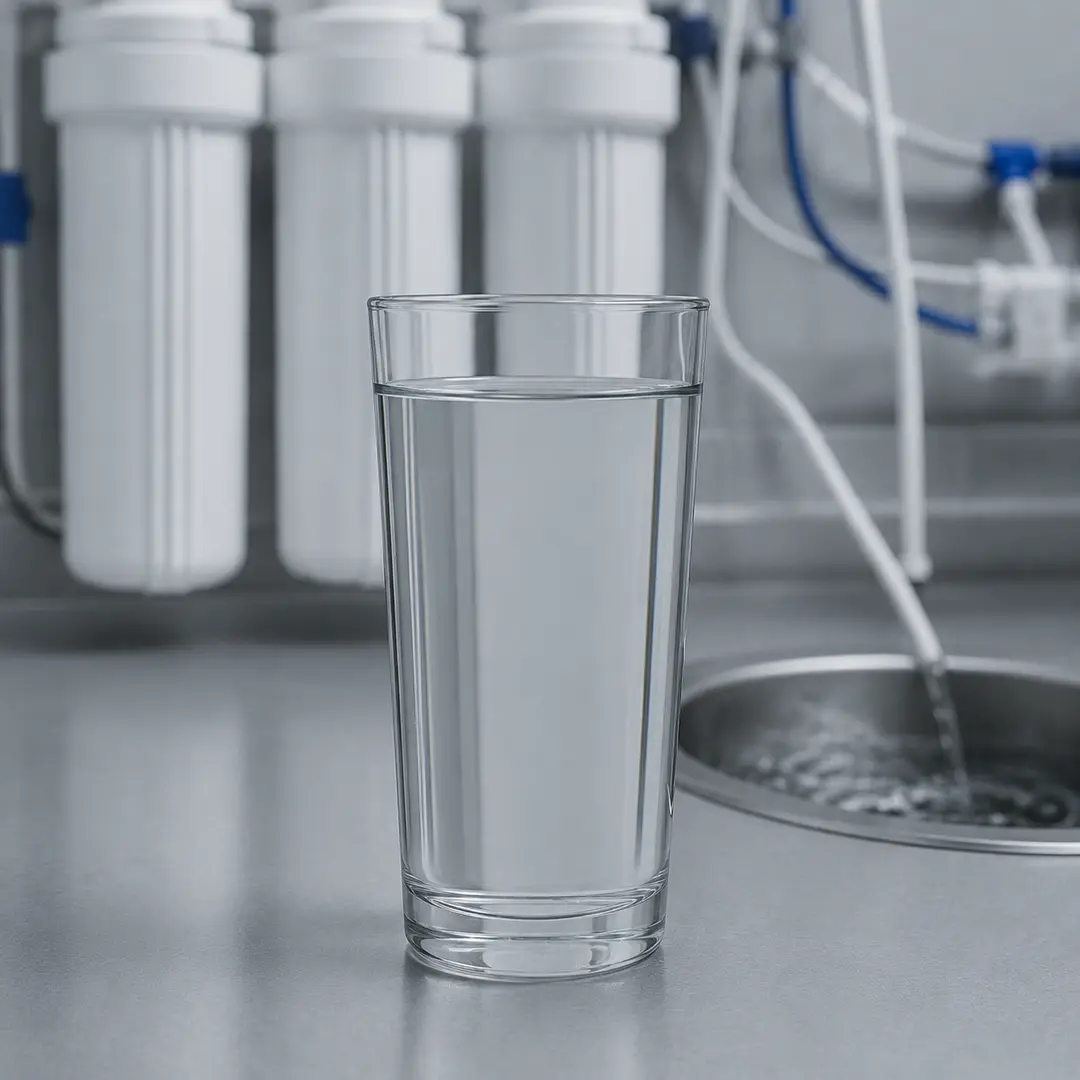
A still, flat glass of reverse-osmosis water in a lab. Sentry H2O Reverse osmosis

Waste figure reflects typical reverse-osmosis systems. Source: U.S. EPA WaterSense, reverse osmosis efficiency guidance.

The other half of the story

RO doesn't just take the bad out — it strips the minerals, too

Stripped water doesn't stay empty — it takes minerals back from wherever it can find them: your food, and your body. That's not a metaphor; it's the finding at the center of the World Health Organization's 2005 review of demineralized drinking water, written for water engineers, not marketers.

Read the full research
Fresh vegetables being rinsed under a kitchen tap in bright natural light — much of our daily mineral intake comes from the food we cook, which is why the water it touches matters
5 concern categories
the WHO documents
  • ~20%

    Low-mineral water doesn't just fail to feed you — WHO-reviewed human studies show it pulls sodium, potassium, calcium and magnesium out of your body and flushes them away. The minerals your heart rhythm and nerves run on, drained by the water you drank to be healthy.

  • up to86%

    Demineralized water is "hungry" water. WHO's review found it leaches trace minerals like cobalt (86%) and manganese (70%) out of food as it cooks — nutrition your dinner should have kept, gone before you pick up a fork.

  • up to19%

    In a WHO-reviewed animal study, a demineralized-water diet meant 19% lower hemoglobin than ordinary tap water — a clearly-labeled animal study, not a claim about human health outcomes.

Figures from the World Health Organization, Nutrients in Drinking Water (2005) — population-level findings tied to sustained, long-term reliance on demineralized water. Educational only, not medical advice; no filtration system treats or prevents any condition.

Naturally alkaline

Naturally alkaline.
Straight from the tap.

The AlkaGuard stage is designed to add calcium and magnesium back and gently raise pH — independent lab testing measured 6.83 in, 8.21 out.

pH varies with source water. Lab-tested result: 6.83 tap, 8.21 after treatment.

Proof first

What one Sentry H2O system pulled out of the water

In the published Tempe dataset, an under-sink Sentry H2O Wellness System was tested on city water before and after treatment. Every result below comes from those reports, not a marketing estimate.

The untreated sample's arsenic, lead and uranium were below federal enforceable thresholds but above SimpleLab's Health Guidance Levels. HGLs are health-protective, non-enforceable benchmarks — not EPA legal limits.

97.4–99.9%

Under-sink reduction where both PFAS results were quantified — most other compounds reached non-detect

0

Detectable lead, arsenic or uranium left after treatment

6.8 → 8.2

pH raised and minerals added back — not stripped like RO

See the full before/after table
Contaminant In the tap After Sentry H2O Reduction
PFOS (forever chemical) 0.671 µg/L Not detected To non-detect
Arsenic 0.00080 mg/L Not detected To non-detect
Lead 0.00030 mg/L Not detected To non-detect
Uranium 0.00049 mg/L Not detected To non-detect
Fluoride 0.52 mg/L Not detected To non-detect
PFBS 0.490 µg/L 0.00034 µg/L 99.93%
PFHxA 0.00498 µg/L 0.00013 µg/L 97.44%
Copper 0.01513 mg/L 0.00056 mg/L 96.3%

One honest note: on the larger whole-house system, four of the eight PFAS detected in the source water reached non-detect. PFOA fell 47.47%, leaving 52.53% of the measured concentration — the lowest figure in the dataset. We show it because a brand that hides its weakest number hasn't earned your trust.

PFAS concentrations are in µg/L; metals and minerals are in mg/L. “Not detected” = below the lab's detection limit. Percentages use the reports' full-precision values and are rounded to two decimal places. Source: independent Tap Score / SimpleLab testing of treated vs. untreated Tempe city water. Read the official Sentry H2O report summary or the privacy-redacted toxins/minerals report and PFAS report. Tested by an independent, EPA-certified laboratory. The lab's certification attaches to the laboratory and methods, not to the results as EPA-approved. Each full report lists that sample's testing facility, EPA analytical methods, laboratory IDs, and accreditation scope per analyte.

Get the highlights

Four reasons homes choose Sentry H2O

A clear glass filling with bright, clean water on a warm oak counter in golden morning light

Zero water wasted

No drain line, no wastewater. A typical reverse-osmosis system sends 3 to 5 gallons down the drain for every gallon it makes.

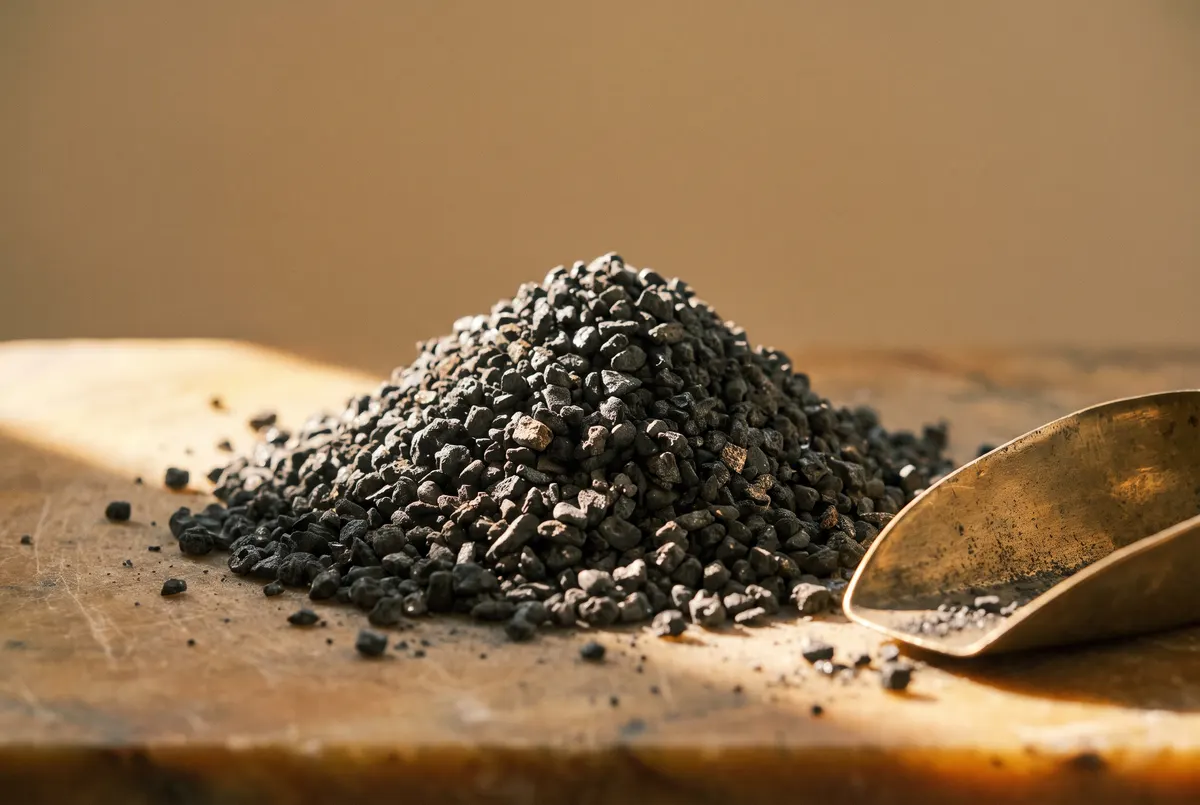
Dark granular catalytic carbon filter media in a brass scoop on warm soapstone

German-engineered media

Catalytic carbon built on German-engineered technology, adapted with US engineering.

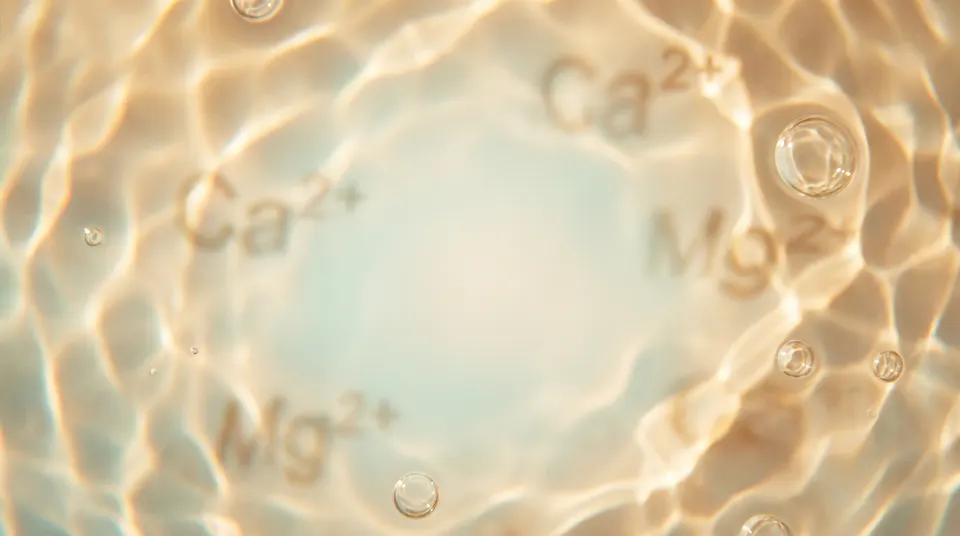
Minerals kept in

AlkaGuard is designed to add calcium and magnesium back — lab-tested pH 6.83 → 8.21.

A magnifying glass resting on printed laboratory report pages beside a glass of water on warm walnut

Tested, not promised

Independent labs, EPA test methods, published reports — including our weakest number.

mtn pure water vs reverse osmosis

Daybreak-area evidence

What the local reports actually showed

The owner identified these two separate SimpleLab samples as Daybreak-area city water collected before treatment and after Sentry H2O treatment. The pre-treatment sample was collected February 20, 2026; the post-treatment report does not state a collection date. Because this was not a same-day controlled trial, we show the reported values without inventing a reduction percentage.

Arsenic & lead

Not detected after treatment

Pre-treatment arsenic was above SimpleLab's non-enforceable Health Guidance Level

Different dates

So we show raw values, not a made-up percentage

Honesty rule: never invent a reduction from uncontrolled samples

See the full Daybreak-area table
Analyte Owner-identified pre-treatment · MZA3JF Owner-identified post-treatment · 2C4J74 Report note
Arsenic 0.0041 mg/L Not detected Pre-treatment: > HGL (0)
Lead 0.000431 mg/L* Not detected Pre-treatment estimate below reporting limit
Uranium 0.00098 mg/L 0.000164 mg/L*† Pre-treatment: > HGL (0)
Aluminum 0.0479 mg/L* 0.108 mg/L† Post-treatment: > HGL (0.07)

* Estimated value below the reporting limit. † Report 2C4J74 uses PPM; in water, PPM is approximately equivalent to mg/L. HGL = SimpleLab's health-protective, non-enforceable Health Guidance Level. Tested by Microbac Laboratories, an independent EPA-certified laboratory. Each full report lists that sample's testing facility, EPA analytical methods, laboratory IDs, and accreditation scope per analyte. Read the privacy-redacted owner-identified pre-treatment report and owner-identified post-treatment report.

Side by side

The honest alternatives to reverse osmosis — three ways to filter your water, compared

We compare the technology types most homes actually choose between — not a specific competitor's box. Each card carries a verdict chip for the approach that leads on that factor — and where reverse osmosis is genuinely the right call, we say so below.

Reverse-osmosis and standard-carbon columns describe general, widely-documented characteristics of those technology types (waste ratio, mineral removal, NSF/ANSI certification), not the performance of any one branded product. RO systems certified to NSF/ANSI 58 reduce PFAS; carbon systems certified to NSF/ANSI 53 with a PFAS claim have been independently verified for that purpose. Match any filter to your own water test before buying.

Being fair about RO

When reverse osmosis is the right call

RO isn't the villain — it's a genuinely excellent technology. Here's exactly where it's the right call, and where it isn't.

If you're dealing with brackish water or a very high dissolved-solids profile, RO's membrane is the more thorough tool for that specific situation, and NSF/ANSI 58-certified units are formally certified for PFAS reduction. Where that's genuinely your water — confirmed by a test — RO earns its place.

The mineral trade-off is real, and worth naming plainly. As wellness researcher Dr. Josh Axe puts it, most reverse osmosis systems have "no way to differentiate between 'bad' ingredients and good ones — so while harmful contaminants are removed, so are the trace minerals that our bodies need to perform properly, like iron and manganese."[1] That's the specific problem AlkaGuard is built to solve — adding calcium and magnesium back rather than leaving them out.

What about nitrates — the concern in agricultural areas and many wells? That's not a reason to accept RO's downsides. Our whole-home systems are custom-fitted with nitrate-selective media, matched to your water test, so you get targeted nitrate removal without RO's waste stream or stripped minerals. It's a matter of building the right system for your water.

The everyday trade-off is what we ask you to weigh: RO sends 3 to 5 gallons down the drain for every gallon it makes, strips the minerals back out of your water, needs a tank under the sink, and treats a single tap. For the majority of city-water homes whose real concerns are chlorine, chloramine, PFAS, lead, arsenic and taste, the catalytic-carbon multi-stage approach covers the same threats with zero waste and minerals left in. That's the honest recommendation — and where it isn't the right fit, we'll tell you.

Want the deeper version? Read Reverse osmosis vs. carbon filtration: an honest comparison, what catalytic carbon actually is, or the full research on reverse osmosis water side effects.

[1] Dr. Josh Axe, DC, CNS — "Is Reverse Osmosis Water Good for You? Or Does It Over-Filter?" draxe.com, November 1, 2023.

alive vs dead water

Straight answers

Common questions

Is Sentry H2O better than a reverse osmosis (RO) system? +

For most city-water homes, yes. RO is a genuinely thorough technology and it leads on very high dissolved-solids (brackish) water. But it wastes 3 to 5 gallons of water for every gallon it produces, strips beneficial minerals, and treats only one tap. In the independent under-sink test, most PFAS compounds treated by the Sentry H2O Wellness System reached non-detect; quantified after-results fell 97.4–99.9%. The system carried by Mountain Pure Water produces zero wastewater and remineralizes rather than strips. And where nitrates are the concern — agricultural areas, many wells — the whole-home system is custom-fitted with nitrate-selective media matched to your water test, so you get targeted nitrate removal without RO’s waste stream. RO still earns its place for very high dissolved-solids loads confirmed by a water test.

How do we know it actually removes what you say? +

Because Sentry H2O published the independent lab reports and the real before-and-after numbers — including the weakest result. In the Tempe under-sink dataset, arsenic, lead, uranium and fluoride went from detectable to non-detect. Most PFAS compounds also reached non-detect; where both before and after values were quantified, reductions were 97.44–99.93%. On the larger whole-house system, PFOA fell 47.47%, leaving 52.53% of the measured concentration — the weakest figure in the dataset. We show it because a brand that hides its weakest number has not earned your trust.

Does it remove the good minerals like reverse osmosis does? +

No — the opposite. Reverse osmosis strips calcium and magnesium along with contaminants, which is why many RO units bolt on a remineralization stage. The Sentry H2O AlkaGuard stage adds calcium and magnesium back and gently raises pH (roughly 8–9.5) natively, for smoother-tasting water without a separate add-on.

How is this different from a pitcher or faucet carbon filter? +

Standard activated-carbon pitchers and faucet filters handle free chlorine and improve taste, but they struggle with chloramine (the longer-lasting disinfectant many utilities now use) and are inconsistent on PFAS and heavy metals. Catalytic carbon chemically breaks down chloramine and, in independent testing, drove PFAS and heavy metals to non-detect. You also refill a pitcher constantly; the Sentry H2O Wellness System is serviced about once a year.

Are Sentry H2O systems NSF certified? +

Sentry H2O reports that its systems are tested to NSF standards. Certification documents are being finalized, so we do not call the systems NSF certified. The published third-party lab reports on this page are independent testing, not certification.

Real customers, real water

Homes that made the switch

Verified Sentry H2O reviews — the honest kind.

Verified reviews of Sentry H2O systems, independently collected by Judge.me.

4.92 /5 ★★★★★
Based on 457 reviews 91% Verified
Judge.me verified reviews
5 434
4 14
3 7
2 0
1 2

Reviews independently collected & verified by Judge.me — verify our reviews

Nothing down the drain

Zero gallons wasted. A typical reverse-osmosis system sends 3 to 5 gallons down the drain for every gallon it makes.

Sentry H2O has no drain line at all — every gallon that comes in goes into your glass.

By Jason Preston, Founder · July 2026 · Educational guidance only — not health or medical advice. Reduction results depend on water chemistry, flow rate and system configuration; your results may differ. Independent lab testing, not an NSF/WQA certification.

Free shipping

On every order over $99

30-day money-back

Taste it on your own water first

Lifetime housing warranty

All housings & durable hardware (filters & media excluded)

Lifetime support

Real people — phone & email

Not sure which system? Ask Wally 💧

Wally

Water finder

Popular questions

Powered by Bearded Brothers Automation